Last Updated on February 9, 2026
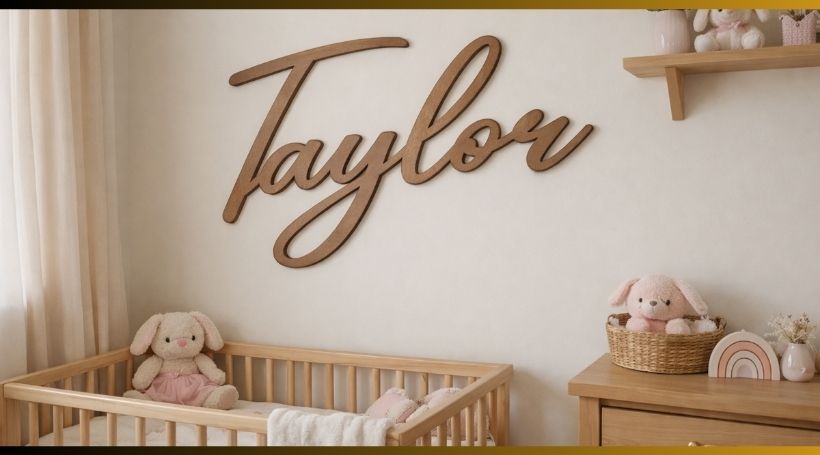
Choosing a custom name plaque for a nursery is easiest when you focus on five things: material, size, font, mounting, and the proof. The right plaque is easy to read from the doorway, suits the room’s style, and stays secure on the wall. Here’s a practical way to pick one without second guessing your choice later.
What should a custom name plaque do in a nursery?
A nursery name sign has two jobs. First, it adds personality, it makes the room feel “done” without needing lots of extra decor. Second, it has to work in real life, meaning it should be readable, safe, and not a pain to clean.
A helpful way to think about it is this: you are buying a wall piece that will be looked at every day, photographed a lot, and probably moved (or removed) at some point. That’s why the boring details like thickness, finish, and hanging method matter just as much as colour and font.
From day to day production, the biggest difference usually comes down to picking the right material for the wall and how the room is used. A humidifier, strong sun through a window, or a textured wall can change what works best.
Which material is best for a custom name plaque?
There is no single “best”, but there is usually a best choice for your wall, your budget, and your style.
MDF, plywood, acrylic, and layered signs
MDF (often painted or sealed)
MDF plaques are popular because they give a smooth, clean look. They work well for painted finishes and soft nursery colours. If you choose MDF, look for a sealed or well-finished surface so you can wipe it gently without the fibres fluffing up.
Plywood (often with a visible wood grain)
Plywood is great if you like a warm, natural feel. It suits woodland themes, neutral nurseries, and rooms with timber furniture. Grain can vary, so if a perfectly even colour matters to you, a painted option might feel more predictable.
Acrylic (solid colour or clear)
Acrylic gives a modern finish and crisp edges. It’s also easy to wipe clean. In nurseries, acrylic is often used as a top layer on a backing, so you get contrast and a more “finished” look.
Mirror acrylic (glossy, reflective)
Mirror acrylic looks amazing in photos, but it shows fingerprints and can reflect light. If the sign sits opposite a window, it can look too shiny at certain times of day.
Layered plaques (two or more layers)
Layered signs are popular because they stand out from the wall and the design looks more detailed. In production, layering also helps with readability, because the name pops against the backing.
If you want to see how MDF plaques and layered designs can look for nursery walls, the custom name plaque range from T.Ess Personalised is a useful example of the different styles makers offer.
Finish choices that change the look (and the cleaning)
- Painted and sealed finishes are softer and suit calm nurseries, but they need gentle cleaning.
- Raw timber looks natural, but can mark if handled often.
- Gloss acrylic wipes clean easily, but shows smudges faster than matte finishes.
A quick practical note: if a sign arrives with a protective film on acrylic, peel it slowly, and check you got both sides. It’s a small thing, but it’s a very common “why does it look cloudy?” moment.
How big should a custom name plaque be?
A custom name plaque can be perfect on the screen and still look wrong on the wall if the size is off. Too small disappears. Too large can take over the room.
As a rough guide, many nursery plaques look balanced in the 25 cm to 40 cm width range, but the right size depends on where it will go and how long the name is. Thickness often sits around 3 mm to 6 mm depending on material and layering, which affects how much it stands out from the wall.
A simple measuring method
- Pick the wall area first (above a change table, over a bookshelf, or on the main feature wall).
- Use painter’s tape to mark a rectangle on the wall in 30 cm x 15 cm, then step back and look from the doorway.
- Adjust the tape up or down until it feels right, then measure the final width.
This takes two minutes and saves a lot of regret.
Size tips based on name length
- Short names (3 to 5 letters): you can go a little wider without it feeling crowded.
- Long names (7+ letters): consider a longer plaque shape, or a simpler font, so letters don’t get too thin.
- Double names: think about stacking (first name over second) or shortening to a nickname for the wall piece.
In day to day production, long names are where legibility is won or lost. When letters get too thin, a beautiful script can become hard to read from a distance.
What font and layout stays readable on a wall?
The cutest font is not always the best font.
Script vs block fonts
Script fonts feel soft and classic, but thin strokes can disappear on patterned walls.
Block fonts are bold and clear, and they still work as your child grows.
If you love script, choose one with thicker strokes and clear letter shapes. “r”, “n”, and “m” are the usual troublemakers in script, they can blend together.
Spacing, dots, and middle names
Spacing matters more than people expect. When names are laser cut, letters need enough space so the inner shapes (like the centre of an “a” or “o”) stay strong.
Before you order, think about:
- Will the plaque include a surname or middle name?
- Do you want a dot over an “i” as a cut out piece (it can be tiny), or attached?
- Are there special characters like apostrophes or hyphens that might be fiddly in small sizes?
Where should you place it, and how do you mount it safely?
Placement is about style, but mounting is about safety.
Wall types and hanging methods
Most nursery walls fall into a few categories:
- Painted plasterboard (drywall): removable strips can work well if the sign is light and the paint is fully cured.
- Textured walls: adhesives may not grip evenly, so a backing board or different fixing might be safer.
- Wallpaper: adhesives can pull the wallpaper when removed, so plan the location carefully.
Common mounting methods include removable strips, keyhole slots, small screws with wall plugs, or standoffs. If you rent, removable methods are often preferred, but always match the fixing method to the sign’s weight.
Safety notes for cots (cribs) and curious toddlers
Avoid placing a plaque where a child could grab it from the cot or climb up to reach it. If it goes above the cot (crib), keep it well out of reach and securely fixed. Toddlers are surprisingly determined, so “it feels stuck on” is not the same as properly secured.
What should you check in the proof before it’s made?
This is the part people rush, then regret.
A quick proofing checklist:
- Spelling, including capital letters
- Name order (first, middle, surname)
- Font style, especially if letters join
- Size, with a measurement in cm
- Colour choices for both name and backing
- Hanging method and any holes or slots needed
From years of working with these materials, a common mistake is approving a proof on a phone screen without zooming in. Zoom in and check letter joins and spacing, especially on scripts.
How do you care for it once it’s up?
Most nursery plaques only need gentle care:
- Dust with a soft cloth.
- For acrylic, a slightly damp microfibre cloth works well.
- Avoid strong cleaners, they can dull acrylic and strip finishes.
- Keep timber away from direct steam (humidifiers) and strong heat sources.
If you plan to store it for a future sibling, wrap it in soft tissue and keep it flat. Packaging matters, because thin edges can chip if they rub against hard surfaces.
Common mistakes to avoid with a custom name plaque
- Ordering too small, then wondering why it looks lost on the wall.
- Picking a very thin script for a long name.
- Choosing mirror finishes for a wall that gets direct sun.
- Forgetting to plan the hanging method before ordering.
- Not considering wall texture or wallpaper when choosing adhesive mounting.
- Skipping the proof check, then noticing an issue only after it arrives.
A custom name plaque should feel like an easy win, not another project. A little planning makes it one of the nicest pieces in the room.
Read More – Tips for Buying Age-Appropriate Toys That Promote Development
5 FAQs (with short answers)
1) What is the best material for a nursery custom name plaque?
For easy cleaning and crisp edges, acrylic is a strong choice. For a warm, classic look, plywood or a sealed MDF plaque works well.
2) What size custom name plaque should I get for a nursery wall?
Many look balanced around 25 cm to 40 cm wide, but measure your wall space with tape first so the sign fits the spot properly.
3) Are script fonts okay for a nursery name plaque?
Yes, but choose a script with thicker strokes and clear letters, especially for longer names.
4) Can I hang a name plaque on wallpaper?
You can, but be careful. Some adhesives can pull wallpaper on removal, so plan placement and ask about safer mounting options.
5) What should I check in the proof before production?
Check spelling, size in cm, colour choices, letter spacing, and the hanging method. Zoom in on scripts to spot any messy joins.
