

Chronic exhaustion, emotional numbness, and constant overwhelm are core signs of mom burnout; prevention needs rest, boundaries, and support.
I have supported hundreds of parents and studied caregiver stress for years. This article explains Signs of Mom Burnout and Effective Ways to Prevent It with clear definitions, real examples, and practical steps you can use today. You will learn how to spot early warning signs, why burnout develops, and which prevention tactics work best for busy moms. Read on for evidence-informed guidance, actionable routines, and compassionate advice you can apply right away.

What is mom burnout?
Mom burnout is a severe form of caregiver fatigue. It combines physical exhaustion, emotional depletion, and reduced coping ability. Signs of Mom Burnout and Effective Ways to Prevent It begin with simple changes in energy and mood and can progress to chronic health and family effects if not addressed. Understanding the definition helps you spot problems early and choose the right fixes.

Common signs of mom burnout
Recognizing early signs is critical. Look for patterns that affect daily life.
- Persistent fatigue. Energy does not recover after sleep or short breaks.
- Emotional numbness. Feeling detached from your children or uninterested in activities you once enjoyed.
- Heightened irritability. Small stresses trigger outsized reactions.
- Sleep and appetite changes. Trouble falling asleep, waking often, or eating much more or less than usual.
- Cognitive fog. Difficulty concentrating, forgetfulness, and decision fatigue.
- Withdrawing from support. Skipping social contact, avoiding friends or partners.
- Chronic worry or anxiety. Ongoing inner tension that doesn’t ease.
- Loss of pleasure in parenting. Feeling like parenting is a duty rather than a joy.
- Somatic complaints. Headaches, stomach problems, and muscle tension without a clear medical cause.
If you notice several of these together, you’re likely seeing Signs of Mom Burnout and Effective Ways to Prevent It should be considered proactively.
Causes and risk factors
Burnout often has multiple causes that build over time.
- Constant caregiving demands without adequate rest or help.
- Lack of sleep or poor-quality sleep over the long term.
- Perfectionism and unrealistic expectations for parenting.
- Isolation from peers and loss of identity outside motherhood.
- Financial stress and job pressures combined with caregiving.
- Preexisting mental health conditions or past trauma that lower resilience.
Common questions people ask:
How fast can mom burnout develop?
Burnout can develop slowly over months or quickly after an intense season of stress, like a newborn or illness. The pace depends on sleep, support, and coping resources.
Is mom burnout the same as postpartum depression?
They can overlap but are not identical. Postpartum depression is a diagnosable mood disorder while burnout is exhaustion tied to role stress; both need attention.
Can one child trigger burnout more than another?
Yes. A child with special needs, health issues, or sleep problems can raise caregiving demands and increase burnout risk.
Effective ways to prevent mom burnout
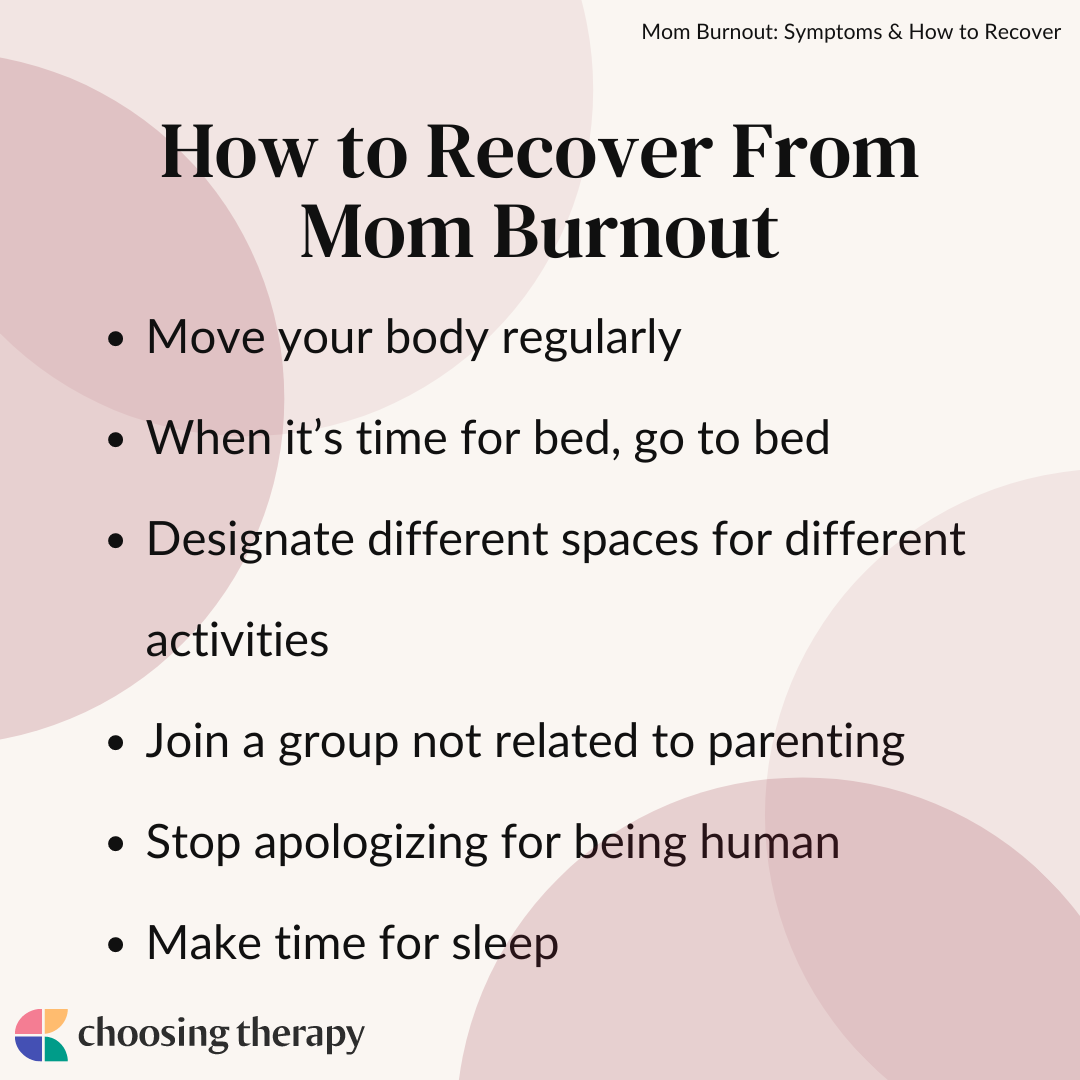
Prevention is practical and achievable. Use layered strategies that fit your life.
- Prioritize sleep. Aim for regular sleep windows. Protect even short naps when possible.
- Build a support network. Ask for help from family, friends, or community resources. Delegation reduces load.
- Set boundaries. Define nonnegotiable rest times and clear work/home boundaries.
- Simplify routines. Reduce errands, meal complexity, and unnecessary tasks. Use batch cooking and lists.
- Schedule micro-recoveries. Short breaks—five minutes with deep breaths or a walk—help reset your nervous system.
- Practice self-compassion. Replace “I should” with “I did my best today” to reduce pressure.
- Use professional help early. A therapist or coach can teach coping strategies and treat underlying conditions.
- Reclaim small identities. Keep one hobby or solo activity that feels like “you” each week.
- Financial planning. Small budget changes that lower stress can prevent burnout escalation.
- Track progress. Use a simple journal to note sleep, mood, and stressors. Patterns guide adjustments.
These strategies address the root of Signs of Mom Burnout and Effective Ways to Prevent It by lowering chronic strain and increasing recovery.

Daily routines and practical plans to prevent burnout
A clear plan prevents decision fatigue and preserves energy.
Morning routine sample
- Wake 20 minutes before kids. Use this time to breathe, hydrate, and set one priority.
- One high-impact task only. Pick what moves the day forward.
- Quick body reset. Five-minute stretch or a short walk.
Afternoon and evening plan
- Meal scaffolding. Prep two freezer-friendly meals each week.
- Switch caregiving roles. Rotate tasks with a partner or caregiver for at least one evening.
- Bedtime wind-down. Turn off screens 30 minutes before sleep and practice a calming ritual.
Weekly checklist
- Book one social or self-care slot per week.
- Review help options. Confirm one recurring support, like a babysitter or grocery delivery.
- Reflect for five minutes. Note one win and one limit to adjust for next week.
These practical steps embody Signs of Mom Burnout and Effective Ways to Prevent It by turning strategy into habit.

When to seek professional help
Professional support is wise when self-care no longer helps.
- Symptoms last longer than two weeks and worsen.
- You have thoughts of harming yourself or feel unable to care for your children safely.
- Daily functioning declines significantly at work or home.
- Therapists, counselors, or medical providers can assess, diagnose, and treat burnout-related conditions. Treatment may involve therapy, medication, or structured support plans.
Early professional help changes outcomes and supports sustained recovery from Signs of Mom Burnout and Effective Ways to Prevent It.
Personal experience and lessons learned
I once worked with a mother juggling a full-time job and a newborn. She waited too long to ask for help. Small changes—two nights off per week, simple meal planning, and weekly therapy—reversed her decline in six weeks. The key lesson: prevention works best when started early, and asking for help is a strength, not a failure.
From my experience, common mistakes to avoid
- Waiting until exhaustion becomes crisis.
- Trying one silver-bullet fix instead of a layered approach.
- Ignoring emotional signs while treating only sleep or diet.
Adopting multiple small habits yields steady relief and reduces the chance you’ll need intensive interventions later.
Frequently Asked Questions of Signs of Mom Burnout and Effective Ways to Prevent It
What is the earliest sign of mom burnout?
The earliest sign is persistent fatigue that doesn’t improve with short rests or a change of routine. Emotional detachment or increased irritability often appears soon after.
Can resting on weekends prevent burnout?
Resting on weekends helps, but consistent daily micro-recovery and regular sleep are more effective long-term. Weekends alone rarely erase accumulated stress.
How can partners help prevent mom burnout?
Partners can share household tasks, manage infant night duties on rotation, and offer emotional support without judgment. Clear communication about needs and limits is essential.
Are there simple self-care practices that work quickly?
Yes. Short, consistent practices—10 minutes of breathing, a brief walk, or a structured bedtime—reset stress levels fast. Consistency matters more than duration.
Is mom burnout treatable without therapy?
Many people improve with practical lifestyle changes and support. However, therapy is strongly recommended if symptoms persist or if there is anxiety, depression, or safety concerns.
Conclusion
Recognizing and addressing Signs of Mom Burnout and Effective Ways to Prevent It protects your health, your children, and your relationships. Start small: prioritize one rest habit, ask for one specific help, and set one boundary this week. Consistent, simple actions add up to strong prevention. Try one tactic today, adjust as needed, and share your progress or questions below to build community and momentum.